Contact the Program Coordinator

Ludmila BIVOL
PhD, University Lecturer
Head of the Animal Resources and Food Safety Department
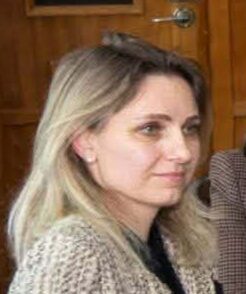
Elena SCRIPNIC
PhD, Associate Professor
Responsible for the Animal Husbandry study program
| Category | Details |
| Form of study | Full-time study |
| Length of study | 4 years (8 semesters, 240 ECTS) |
| Admission requirements | 1. English Proficiency: Candidates must demonstrate proficiency in English. 2. Academic Background: · Baccalaureate diploma or an equivalent educational qualification, vocational education diploma, higher education diploma. |
| Eligibility for English proficiency exemptions | 1. Candidates holding degrees or certificates from universities where English was study language. 2. Candidates with an English language certificate of at least C1 level. |
| Aim of the study program | The study program “Animal Husbandry” provides the opportunity to develop practical skills in the field of reproduction, breeding, feeding, improvement and exploitation of farm animals and poultry, as well as bees, rabbits, fish and fur animals. This program also covers the implementation of modern technologies for obtaining and capitalizing on animal products. Within this program, you will acquire knowledge about the functioning of animal husbandry techniques and systems, you will be able to successfully design and manage zootechnical structures aimed at ensuring animal welfare, using modern software and taking into account environmental protection and the manufacture of ecological products. You will study animal behavior, understand specific growth and development processes, and have the ability to preserve and manage genetic material with high productive performance. Graduates of this program can work on farms breeding various animal species, in breeders’ associations, in breeding holdings specializing in various animal species, in animal selection and breeding centers and in other related fields. |
| Acquired competencies | Graduates of the Animal Science major acquire a complex set of professional and transversal skills, which allow them to work in various fields, from farm management to research and consultancy. These skills cover both technical and economic and managerial aspects, preparing them for a successful career in the agri-food industry. Animal breeding, exploitation and improvement: Graduates learn to apply modern technologies for the efficient breeding, reproduction and exploitation of domestic animals (cattle, sheep, goats, pigs, poultry, etc.). They acquire in-depth knowledge of genetics, nutrition and animal physiology, essential for improving the gene pool and productivity. Animal nutrition and feeding: A key skill is the ability to develop balanced feed rations and manage animal feeding according to species, age, physiological stage and type of production (milk, meat, eggs). This also includes knowledge of feed production and conservation. Management of animal farms: Graduates are prepared to organize and coordinate the activities on a farm. This involves planning, managing human and material resources, supervising production processes and implementing modern technologies to maximize economic efficiency. Processing and valorization of animal products: Specialized courses provide students with knowledge about the technologies for processing milk, meat, eggs and other animal products, as well as about quality standards and food safety. Design and research: Graduates can develop technological engineering projects for the construction and modernization of farms, as well as thematic scientific research plans, focused on genetic improvement, increasing production and improving product quality. |
| Studied disciplines | 1st year: Mathematics applied to life sciences; Information technologies and cybersecurity; European integration; Introduction to Agricultural Sciences; Agricultural energy base; Cell biology; Anatomy, histology and embryology; Ethics and academic integrity; Animal biochemistry; Animal physiology; Feed production and preservation; Etology; General and special microbiology; Biophysics. 2nd year: Experimental technique; Scientific research methods and techniques; Ecology and environmental protection; Digital Applications in Agricultural Sciences; Animal genetics; Animal breeding 1; Animal nutrition and feeding 1; Foundations of state and law; Labor and social protection law; Conservation of genetic resources; Animal reproduction; Animal hygiene and animal welfare; Aquaculture; Animal breeding 2; Animal nutrition and feeding 2. 3rd year: Philosophy and critical thinking; Hoorse breeding technology; Poultry breeding technology 1; Cattle breeding technology 1; Pig breeding technology 1; Sheep and goat breeding technology 1; Beekeeping; Basics of design and zootechnical construction; Pathology and sanitary-veterinary technique; Rabbit breeding, fur and hunting animals; Technological practice. 4th year: Production practice; Poultry breeding technology 2; Cattle breeding technology 2; Pig breeding technology 2; Sheep and goat breeding technology 2; Marketing; The basics of entrepreneurship; Management of animal by-products; The management of projects; Feed quality control; Technology of productions of animal origin; Reproductive biotechnologies; Research practice; Bachelor’s Thesis |
| State final examination | Studies are completed by defending the bachelor’s thesis |
| Career opportunities | Due to the skills acquired, graduates of the Animal Husbandry specialty have a wide range of employment opportunities, both in the private and public sectors. Among the most common roles are: Livestock engineer: Can work on livestock farms, coordinating the entire production process. Farm manager: Has the responsibility of managing and streamlining the activity of a livestock unit. Animal nutrition specialist: Can work in feed production companies or on farms, to optimize the diet of animals. Researcher: Can work in research institutes, contributing to the development of new technologies and methods in livestock. Civil servant in state institutions: Can hold positions within ministries, paying agencies, consumer protection offices or livestock breeders’ associations. Entrepreneur: Can initiate and develop their own business in the livestock field, from setting up a farm to specialized consultancy. Teacher. |
| Study fee | 2300 Euro per academic year |